
Fault actually found, not just masked
Testing identifies the real cause of a dead socket or tripping circuit, so the same fault does not reappear a month later.
Domestic Indoor Electrical Work
From a single dead socket to a full cooker circuit, indoor electrical work is diagnosed properly and priced before anything is touched, so you know exactly what a job costs and why it needs doing.
Small jobs at a flat call-out price, everything else quoted individually. NAPIT Approved Domestic Installer, Reg. 79130, quotes are free.
13 years
On the tools as an electrician
NAPIT 79130
Approved Domestic Installer
Flat rate
Call-out price for small jobs
£2m
Public liability insurance
The service
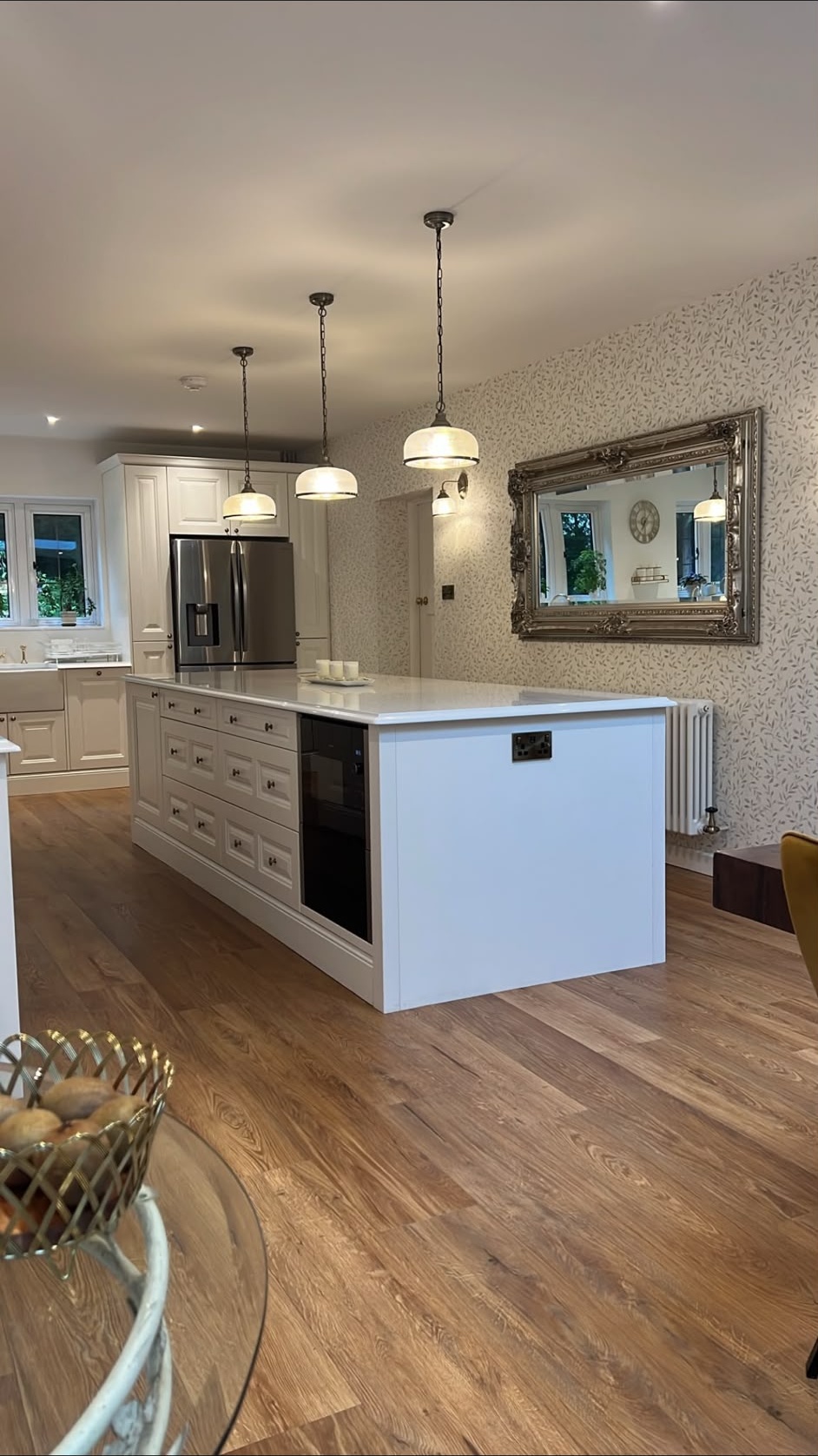
Indoor electrics covers everything running inside the walls, floors and fittings of a property: socket outlets, light switches, ceiling roses, pendant and downlight circuits, extractor fans in bathrooms and kitchens, and the dedicated circuits feeding cookers, showers and other fixed appliances. It is the day-to-day electrical fabric of a home, and it is also the area where the widest range of DIY additions, unlabelled cabling and inherited quirks tend to accumulate.
A socket that has stopped working is rarely just that socket. It can be a loose terminal at the accessory, a fault further back on the ring, a tripped RCD hiding a different problem entirely, or a spur added years ago that was never wired correctly. Diagnosing it properly means testing the circuit, not just replacing the faceplate and hoping.
Cooker and shower circuits carry a lot of current through a single dedicated cable and isolator, so the cable size, the protective device rating and the earthing arrangement all have to match the appliance being installed. Extractor fans in bathrooms bring zone requirements into play, where a fan can sit, what IP rating it needs, and whether it needs to be wired via a fused connection unit or a pull cord.
Everything is quoted individually after Adam has actually seen or been talked through the job. There are no fixed package prices for general indoor work because a socket swap in an easy stud wall and the same swap behind a fitted kitchen unit are not the same job, and pricing them the same would mean either overcharging one customer or losing money on the other.
Sockets that have stopped working, switches that feel warm, lights that flicker or an RCD that trips when a specific appliance is used all point to something worth diagnosing rather than living with.
New cooker circuits, extractor fans, shaver points and additional sockets are common alongside a refit, and need to be planned around the existing consumer unit capacity.
Adding sockets to a room that never had enough, upgrading light fittings, or fitting dimmer switches and USB sockets as part of gradual home upgrades.
What happens if it waits
Indoor faults are easy to mask temporarily, a reset RCD, a replaced fuse, a socket that works again after being wiggled. None of that tells you why it happened.
A socket or switch that feels warm, has scorch marks or smells faintly of hot plastic has a loose or failing connection. Left alone, this is one of the more common causes of domestic electrical fires.
Adding sockets, extension leads and appliances to an old circuit without checking its capacity leads to repeated tripping, and eventually to conductors running hotter than they should.
Swapping a cooker or shower for a higher-rated model without checking the existing cable and breaker can leave a circuit working, but working too close to its limit under sustained load.
Fitting the wrong IP-rated fan, light or socket in a bathroom zone is a common DIY error that is invisible until it causes a fault in a wet environment.
Extra sockets and lighting points added by previous occupants, without records, make future fault-finding slower and more expensive than it needs to be.
New circuits, consumer unit changes and certain kitchen or bathroom work are notifiable under Building Regulations Part P. Skipping certification leaves no evidence the work was done safely, which can complicate a future sale.
How it works
A call or photo of the issue, a dead socket, a fitting to be replaced, a new circuit needed, is enough to give an initial view and, for straightforward jobs, a price over the phone.
For anything beyond a simple swap, Adam inspects the circuit, tests as needed, and identifies the actual cause rather than just the visible symptom.
Small jobs are priced at a flat call-out rate; larger indoor work such as new circuits or multiple room rewiring is quoted individually in writing.
Circuits are isolated safely, work completed to current wiring regulations, and everything tested before power is restored.
Notifiable work is certified and registered through NAPIT. You are told at the outset whether your job falls into that category.
What you get
Testing identifies the real cause of a dead socket or tripping circuit, so the same fault does not reappear a month later.
Every job is quoted against what it actually involves, rather than forced into a generic package that either overcharges or under-delivers.
A single socket, switch or light fitting is priced simply, without a minimum call-out that assumes a much bigger job.
Bathroom zones, kitchens and outbuildings get accessories with the right IP rating, rather than whatever was fitted originally.
New circuits and notifiable alterations are registered through NAPIT, giving you a paper trail if you ever sell the property.
If a job is actually a symptom of a bigger issue, an ageing consumer unit, an overloaded ring, you are told plainly, with the reasoning, rather than being sold an unnecessary extra.
In detail
Indoor electrics is a broad category. What follows breaks down the common jobs and what genuinely differs between them, based on work carried out across Fleet and the surrounding Hampshire and Surrey border.
Most socket and switch faults trace back to one of a handful of causes: a loose terminal, a failed accessory, a broken connection further along the ring, or a tripped RCD masking an insulation fault elsewhere. Proper diagnosis means isolating the circuit and testing it, not just swapping the faceplate.
Adding sockets to a room is straightforward where an existing circuit has spare capacity, but that has to be checked rather than assumed, older rings in particular can already be close to their design limit once modern appliance loads are added up.
USB sockets, dimmer switches and smart switches are commonly requested upgrades. Compatibility with existing wiring, especially with LED lighting and two-way switching, needs checking before fitting, since not every dimmer works cleanly with every lamp type.
Pendant lights, downlights and outdoor-facing porch or hallway fittings are all wired slightly differently, and older properties frequently have a mix of wiring methods from different decades layered on top of each other, loop-in, junction box and radial systems can all appear in the same house.
Converting to downlights or adding extra lighting points needs the existing circuit checked for capacity and, in older homes, for whether the cable and connections are in a condition worth building onto. Loft insulation around downlights also needs the correct fire-rated, insulation-contact-rated fittings to avoid overheating.
Cookers and showers each need their own dedicated circuit sized to the appliance, with an appropriately rated isolator switch positioned for safe, convenient use. Replacing a shower or cooker with a higher-rated model is one of the more common indoor jobs, and one of the more common places where the existing cable and breaker turn out to be undersized for the new appliance.
Extractor fans in bathrooms have to meet zone requirements, the closer to a bath or shower, the higher the IP rating needed, and certain zones require the fan to be low voltage or fed via a fused connection unit outside the room rather than a standard switch inside it.
This kind of circuit work is notifiable under Building Regulations Part P, and is certified and registered through NAPIT once complete.
Not every indoor job is a project. A cracked faceplate, a switch that has stopped clicking properly, a light fitting replacement or a socket that needs moving a few inches; these are priced at a flat call-out rate rather than an inflated minimum charge designed around bigger work.
The same standard of testing and certification applies regardless of job size. A small repair that reveals a bigger underlying issue, such as a scorched connection or an overloaded circuit, is flagged honestly rather than left unmentioned because the original job was small.
Not sure which one you need? Start on the homepage or send the details for a free quote.
Common questions
Small jobs such as a socket or switch repair are priced at a flat call-out rate. Larger work, new circuits, multiple room rewiring, cooker or shower circuits, is quoted individually after Adam has seen or discussed the job. Quotes are free.
The phone is answered every day, and appointments run Monday to Friday 8am–4:30pm and Saturday 8am–12pm. Emergency call-outs are available on weekdays and some Saturdays, though not Sundays.
Some indoor work, such as new circuits and certain kitchen or bathroom alterations, is notifiable under Building Regulations Part P. Where that applies, the work is certified and registered through NAPIT. You will be told upfront if your job falls into this category.
Yes. Cooker and shower circuits are sized to the specific appliance being installed, with the cable, breaker and isolator matched to its rating rather than assuming the existing setup is suitable.
A single socket or switch repair is usually under an hour. A new circuit, such as for a cooker or extractor fan, typically takes half a day to a full day depending on cable routing and access.
This usually points to an insulation fault, a fault in an appliance plugged into that circuit, or damaged cable somewhere along the ring. It needs testing rather than repeatedly resetting the RCD and hoping it stops.
Yes. Jackson's Electrical Contractors is a NAPIT Approved Domestic Installer, registration number 79130, holding NVQ Level 3 in Installing Electrotechnical Systems and Equipment with a passed AM2 assessment, £2 million public liability cover and £250,000 professional indemnity cover.
Bank transfer is preferred. A deposit is required on larger jobs such as multi-circuit work, but not typically on small repairs or single-circuit installations.
Yes, indoor electrical work is carried out across Fleet, Farnborough, Aldershot, Guildford, Farnham, Camberley, Ascot, Yateley and Sandhurst.
Free, no-obligation quote
Whether it is a single dead socket or a new cooker circuit, call with the details and get a straight answer on price and timing, with no fixed package pushed on you regardless of the job size.